How Wicomico County Public Schools Transformed Student Engagement with SchooLinks
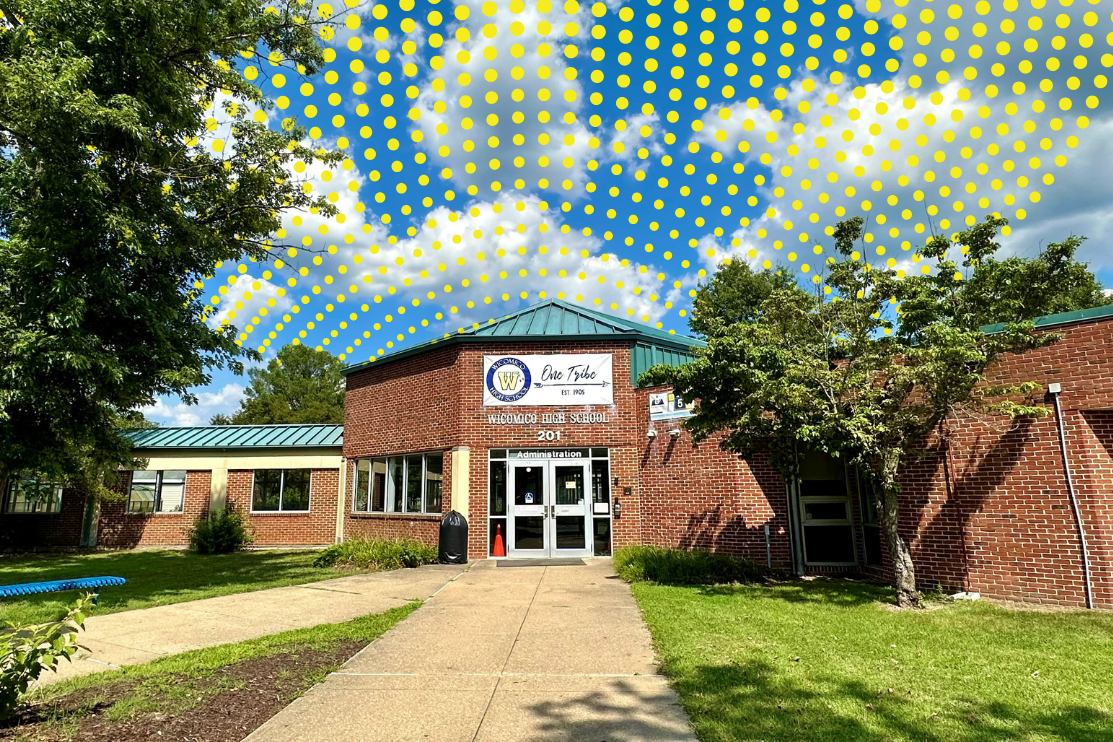
How Wicomico County Public Schools Transformed Student Engagement with SchooLinks
How Wicomico County Public Schools Transformed Student Engagement with SchooLinks
How Wicomico County Public Schools Transformed Student Engagement with SchooLinks
How Wicomico County Public Schools Transformed Student Engagement with SchooLinks
How Wicomico County Public Schools Transformed Student Engagement with SchooLinks
How Wicomico County Public Schools Transformed Student Engagement with SchooLinks
How Wicomico County Public Schools Transformed Student Engagement with SchooLinks
Don't miss our breakout sessions!
Book time with our team on-site!
Our team is excited to meet you. Book a time that works best.

From Reluctance to CCR Readiness:
Wicomico County Public Schools, located in Salisbury, Maryland, serves approximately 7,500 secondary students across five middle schools, four high schools, one alternative school, and one evening high school. The district occupies a distinctive sweet spot: it is large enough to offer a wide range of academic and career pathways, yet small enough to maintain a deeply personalized approach to supporting students. Within this environment, Wicomico has intentionally cultivated a system where every student can find a place to belong, connect with peers and mentors, and pursue opportunities aligned with their interests and goals.
That commitment is reflected in the breadth of options available to students. From dual enrollment and Advanced Placement courses to a variety of career-connected programs, the district has prioritized creating multiple entry points for students to explore and define their futures. At its core, Wicomico's approach is grounded in the belief that access alone is not enough—students must also be meaningfully engaged in the process of discovering and pursuing pathways that resonate with who they are.
Amy Rhodes, Supervisor of Secondary School Counseling and Career Counseling, plays a central role in advancing this work across the district. With experience as a school counselor, she brings a practitioner's perspective to system-level decisions. The district's previous CCR platform was falling short on multiple fronts. Student engagement was a persistent challenge with CCR activities frequently met with reluctance and resistance. Rhodes recalled that kids would groan, not wanting to open their laptops, during lessons. The platform itself compounded the problem, with limited functionality and unreliable customer support that made even minor issues difficult to resolve.
That experience made the district's priorities clear when it began searching for a replacement. Wicomico needed a platform that was intuitive, accessible, and capable of genuinely engaging a diverse student population where every student, regardless of background, language, or experience, could meaningfully participate in the CCR process. That search led the district to SchooLinks, which Wicomico began implementing in 2023.
From Cumbersome to Engaging: A New Level of Student Engagement
One of the most immediate and striking differences with SchooLinks was student engagement and it was apparent even before the district formally introduced the platform. During the summer rollout, Rhodes logged into the system and noticed a steady stream of student names populating the platform. At first, she assumed they were demo accounts and reached out for clarification. Instead, she discovered that because Clever and SchooLinks were already connected, real students had independently logged in and begun exploring. Without any prompting, they were searching for colleges, browsing job opportunities, and completing interest inventories, which they had not yet been asked to do. The organic engagement stood in stark contrast to the district's previous experience. As Rhodes reflected, "This gave us a lot of hope because we had issues getting students, staff, and families to engage with our previous platform."
That early momentum proved significant, particularly because some students initially approached SchooLinks with hesitation. Based on prior experience, they expected more of the same frustration. Under the previous platform, even simple workflows created unnecessary barriers. After completing a lesson, students were required to navigate to a separate section and manually check a box to confirm completion. That additional step consistently disrupted the experience; once students left the lesson, many did not return. Friction was introduced at exactly the point where momentum mattered most.
With SchooLinks, that friction is gone. Completion tracking is automatic, allowing students to move seamlessly from one activity to the next. The content itself has made a difference as well. Rhodes noted that the platform's design and materials are more relatable and accessible, making it easier for students to connect with the material. These shifts represent a fundamental change in how students experience CCR work—from something they are required to complete to something they are willing, and even eager, to engage with.
Built for Blueprint: Turning State Requirements into Student Success
The Blueprint for Maryland's Future is a sweeping statewide education reform initiative that sets ambitious expectations for how districts support student readiness. Among its many requirements, the Blueprint mandates that districts develop and maintain individualized learning plans for students—documenting academic progress, career exploration, and postsecondary goals in a way that is accessible to students, families, and educators alike. For Wicomico County Public Schools, meeting those requirements in a meaningful and manageable way has been one of the most significant undertakings of recent years. Wicomico made the switch to SchooLinks just before the Blueprint's requirements went into effect and the district was grateful to already be on the platform and well-positioned to build out what was needed in order for them to deliver on those requirements effectively.
From the outset, the SchooLinks Customer Success Managers played an instrumental role in making SchooLinks work for Wicomico's Blueprint-specific needs. Rhodes noted that what stood out most was how proactively the SchooLinks team operated, often arriving to meetings already familiar with Maryland's state requirements and the metrics the district would need to track, before Rhodes had even raised them. That kind of preparation accelerated the process considerably, helping Rhodes make informed decisions about how the individualized planning tools should look and function for both staff and students, and allowing the two teams to develop the solution together rather than starting from scratch.
While counselors had long worked with students on academic planning, housing academic and career planning together in a single, electronic document was new for the district. SchooLinks was able to build on its existing Key Readiness Indicator tracking, which supports state-level metrics and personalized learning plans, and augment it, with Rhodes' direct input, to meet Maryland's specific Blueprint requirements. Rhodes provided the state metrics and, together with the SchooLinks team, helped shape an individualized plan that captured what the district needed to collect and how that data would be reported.
The district has spent the current school year developing, testing, and refining this approach in preparation for a full rollout next year. Rhodes is enthusiastic about what it will mean for students: "A lot of what the students are doing throughout the school year through classroom lessons with career coaches and school counselors will automatically populate into their plan for them to review again, make tweaks wherever they need to—if their interests change or they now want to go to college and they had selected workforce—and they can review that and plan with the counselors and career coaches for the next school year." The result is a living document that evolves alongside the student rather than a static snapshot.
For students and families alike, the benefits are clear. The individualized plan gives students a single place to see the full picture of their CCR progress, and it gives parents easy access to that same information along with the ability to review, sign off on, and engage in meaningful conversations about their child's plans. Rhodes acknowledged that rolling out a tool of this scope will require time, training, and coordination to fit into already busy schedules. But the potential benefit to students makes it well worth the effort.
A Smarter Approach to Scope, Sequence, and Accountability
When the district first implemented SchooLinks, district leaders began by developing a scope and sequence aligned to the platform’s recommended framework. But rather than treating it as set in stone, they approached it as a working model. Counselors and career coaches were asked to actively engage with the lessons, test what resonated at each grade level, and refine where and how content was delivered. Over time, that iterative process allowed the district to build a scope and sequence that reflected both the Blueprint’s requirements and the realities of their students and schools.
As the system matured, the focus shifted from design to accountability. Rhodes oversees student completion across the district, ensuring that required lessons and activities are not only assigned, but completed. Over the past several years, Wicomico has worked intentionally to strengthen this layer and make sure students are not missing key experiences and that the work is happening consistently across schools.
That effort brought to light an important challenge. While the district could track overall completion within units, it was more difficult to drill down into individual lessons to see exactly where gaps existed. Rhodes and her team needed a more precise way to identify which students had missed specific activities and to respond in a timely way.They brought that need directly to SchooLinks. In response, the platform introduced enhanced functionality that allows district leaders, counselors, and career coaches to view completion at the lesson level. Now, staff can quickly identify which students have not completed specific activities, spot gaps across entire classes, and follow up with targeted support.
This shift has fundamentally changed how accountability operates within the system. Rather than relying on centralized oversight alone, SchooLinks enables shared responsibility across the district. Counselors and career coaches can monitor their own students, address missed learning in real time, and ensure that all students are fully engaging with the experiences designed for them. For Wicomico, the work is no longer just about assigning lessons; it is about ensuring that every student accesses the full set of opportunities intended to support their growth.
Transforming College Application Management and Scholarship Tracking
Before SchooLinks, Wicomico County Public Schools used Naviance to manage the college application process. When asked what has improved since making the switch, Rhodes' answer was simple: "Everything." The College Application Manager is user friendly for both students and staff, giving everyone a clear picture of what needs to be done, what documents need to be sent to colleges, and making it straightforward to upload recommendations. Counselors are in SchooLinks daily and pulling reports to evaluate data has become significantly easier. Rhodes explained that the senior survey now lives directly within SchooLinks as well, giving the district the ability to add questions, collect richer end-of-year data, and analyze it quickly. The district can evaluate which colleges students are most frequently applying to, track acceptance and denial rates, and use that information to inform future planning, which was not possible before.
Scholarship access for students has also been rethought entirely. Rather than individual schools managing their own listings on social media or websites, one district-level staff member now uploads all scholarships into SchooLinks, where every student can access, sort, and search for opportunities relevant to them. And scholarship tracking has undergone an equally dramatic transformation. Previously, counselors collected scholarship information from students manually using paper, pencil, and calculators to calculate totals. Now, the district can pull a single report and have it ready to submit to the state within five minutes.
Unmatched Customer Service Supporting District-Wide Buy-In
Underlying much of Wicomico's success with SchooLinks is a level of customer service that Rhodes describes as exceptional from day one. A significant part of what has made the partnership work is the platform's responsiveness to the district's evolving needs, particularly when it comes to reporting. Generating reports from SchooLinks is straightforward, and when the district has needed something different or more specific, the SchooLinks team has consistently delivered. "I cannot tell you the number of things that have been developed because I asked," Rhodes said. What has impressed her most is that requests she expected to be turned down have instead been met with creative solutions. "Every time I think it is going to be a 'sorry, we really cannot do that,' immediately they come back with another option for me—and a video along with it telling me how to do it." That responsiveness has built real trust and made the partnership feel collaborative rather than transactional.
That foundation of strong customer service also made the district's internal rollout remarkably smooth. When SchooLinks was first announced to staff, the reaction was predictable: hesitation, frustration, and concern that the new platform would mirror the limitations of the one it was replacing. Rhodes understood those concerns and planned accordingly. Rather than launching in the middle of the school year, she ensured that comprehensive training was in place before the year began. Staff had the opportunity to see the platform, explore it, and experience firsthand how intuitive it was to use. That hands-on exposure made all the difference. Buy-in was not difficult once staff could see for themselves that SchooLinks was meaningfully different from what they had used before.
For Rhodes personally, the decision to adopt SchooLinks carried real weight. She was only about six months into her role as supervisor when the district decided to switch platforms. As a counselor, she had used the previous platform for years and knew intimately what was not working. She was determined to find something more user- and student-friendly, and she felt the responsibility of that decision keenly. The relief she felt once SchooLinks was in place was immediate. Looking back, she has no reservations.
That confidence has extended beyond Wicomico's walls. At state meetings, Rhodes finds herself regularly sharing the district's experience with SchooLinks because the results have been so strong. "Across our state—where we are with Blueprint now—I wish that every county in our state would use SchooLinks, because it would be very easy," she said. The benefits would extend to students as well: with a notable number of transient students moving between counties, a shared platform would make transferring student information seamless. As long as other counties are using SchooLinks, a student's CCR history could follow them, as it is tied to their state ID number, rather than being lost in transition. It is a vision that speaks to just how much Rhodes believes in what SchooLinks makes possible, not just for Wicomico, but for Maryland students broadly.
The Power of Collaboration Across SchooLinks Districts
Maryland's Blueprint has brought an additional unexpected but welcome benefit to Wicomico County: a deepened spirit of regional collaboration. Through the Blueprint, Wicomico has been identified as part of a tricounty area alongside Somerset and Worcester Counties that shares the same workforce development board and works in partnership with a regional community college. While the three counties are meaningfully different in size and context (Somerset being smaller and more rural, Worcester falling in the middle, and Wicomico the largest of the three), their shared use of SchooLinks has made alignment both possible and productive.
The counties collaborate on individualized learning plans, six-year planning frameworks, and reporting to ensure that the data being submitted to their accountability board and to the Maryland State Department of Education is consistent and pulling from the same sources. At the same time, they are intentional about recognizing that each county has distinct needs, and that collaboration does not mean uniformity. The result is a partnership that allows each district to benefit from shared thinking without having to start from scratch. As Rhodes put it, it is a “win-win” as there is no need to reinvent the wheel when neighboring districts are navigating the same landscape. Wicomico also maintains an active dialogue with St. Mary's County, another SchooLinks district, further expanding the network of shared knowledge and practice.
SchooLinks: Where Every Opportunity Comes Together
As students have grown more familiar with SchooLinks, the breadth of what the platform makes possible has become increasingly clear. From college research and career exploration to scholarships, internships, apprenticeships, and work-based learning opportunities, SchooLinks serves as a single destination where students can access and act on the full range of their CCR journey. Events—whether guest speakers, career activities, or community experiences—are logged directly in the platform, attendance is tracked, and those experiences flow automatically into each student's individualized learning plan. Nothing is lost, and nothing has to be re-entered. As Rhodes put it simply: "SchooLinks really pulls it all together for us."
For districts considering the platform, Rhodes does not hesitate. "If you are considering using SchooLinks and you are unsure, go for it. I have never once been disappointed by the use of SchooLinks. It has done nothing but improve our practices with school counselors and career coaches. It has been a great tool for students to be able to use—to get in there and access so many opportunities, whether it is service learning, career, college, or inventories to determine their skills and interests. It has been a huge benefit to our county. It is so easy to use. And you can absolutely not find better customer service anywhere." For Wicomico County Public Schools, SchooLinks has become more than a platform; it is the infrastructure behind a countywide commitment to ensuring every student is seen, supported, and prepared for whatever comes next.
Related Posts
See All
Simplifying Student Success at Hauppauge Public Schools with SchooLinks
How Paradise Valley Unified School District Customized CCR in Arizona with SchooLinks
Supporting College & Career Readiness at Rolla Public Schools in Missouri

Get started with SchooLinks today.
