A CCR Platform That Evolves With Our Needs: Jenks Public Schools Builds with SchooLinks
A CCR Platform That Evolves With Our Needs: Jenks Public Schools Builds with SchooLinks
A CCR Platform That Evolves With Our Needs: Jenks Public Schools Builds with SchooLinks
A CCR Platform That Evolves With Our Needs: Jenks Public Schools Builds with SchooLinks
A CCR Platform That Evolves With Our Needs: Jenks Public Schools Builds with SchooLinks
A CCR Platform That Evolves With Our Needs: Jenks Public Schools Builds with SchooLinks
A CCR Platform That Evolves With Our Needs: Jenks Public Schools Builds with SchooLinks
A CCR Platform That Evolves With Our Needs: Jenks Public Schools Builds with SchooLinks
Don't miss our breakout sessions!
Book time with our team on-site!
Our team is excited to meet you. Book a time that works best.

“A CCR Platform That Evolves With Our Needs”:
How Jenks Public Schools Built a Cohesive, Student-Centered System
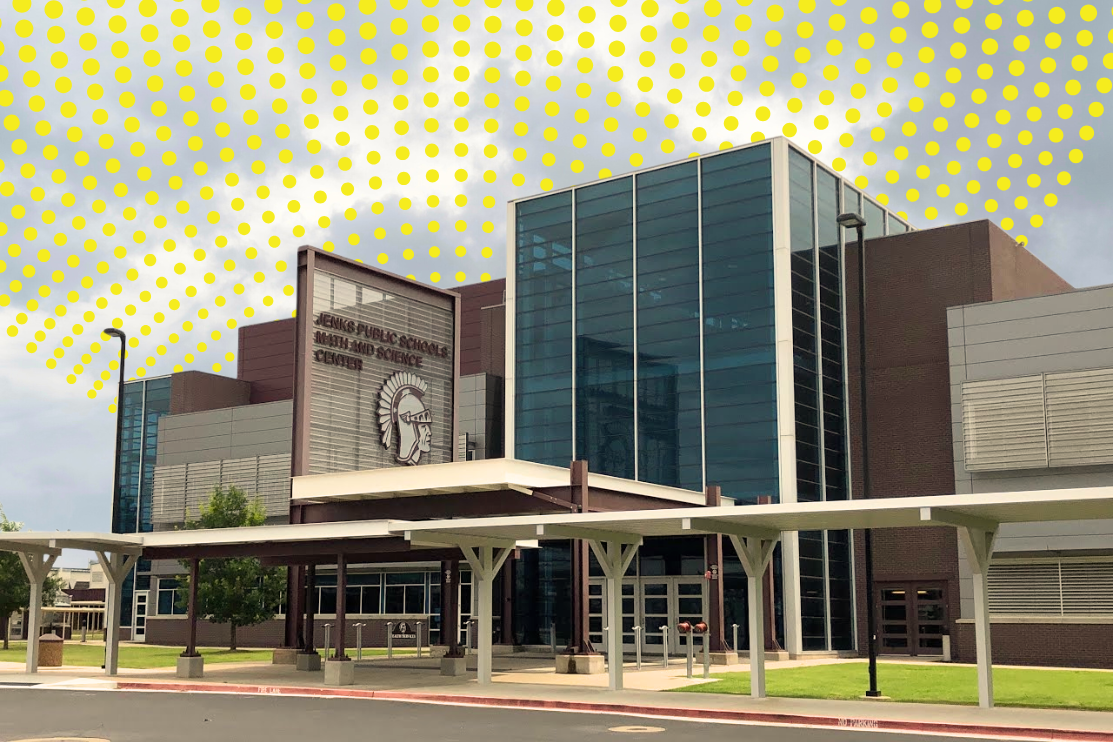
Jenks Public Schools is located in a suburb just outside Tulsa, Oklahoma and serves approximately 12,700 PreK-12th grade students across ten school sites. The district is guided by a deeply held philosophy that every student has a path and every path looks different. Because of this guiding vision, Jenks has built its college and career readiness (CCR) work around personalization, flexibility, and a profound respect for all postsecondary next steps. Whether students aspire to attend an Ivy League university, enroll at a state flagship university, begin at a community college, compete at a Division I institution, or enter the workforce through specialized trades, Jenks is committed to ensuring each pathway is fully supported.
The district summarizes this commitment in its motto: “All Trojans, every day.” For Jenks, this reflects a systems-level approach to creating individualized CCR experiences that honor students’ aspirations while equipping them with the skills, knowledge, and thoughtful planning needed to be successful.
Dr. Ellen Vannoy, Director of Academic Programs and Student Learning, leads this effort across the district. After nearly a decade as an assistant principal in Jenks, she transitioned to the district level and now oversees a broad portfolio that includes AVID, Advanced Placement, local and federal grants, specialized student programs such as aviation, the college and career office, and vertical alignment across grade levels. With a background rooted in both campus leadership and district strategy, Vannoy brings a comprehensive approach to ensuring that Jenks’ academic systems and resources align seamlessly with its promise to serve all students. SchooLinks has been a pivotal tool in bringing this vision to life.
Recognizing the Need for a Platform Aligned with Their Vision
In recent years, Jenks began re-examining its CCR systems and leaders recognized a growing disconnect between their evolving vision and the capabilities of their previous CCR platform. The system had been in place for years and, as Vannoy explained, “It did what it did and it was fine.” But “fine” was no longer sufficient. Customer support had become a persistent challenge. When questions arose or the district needed to think through new approaches, it was difficult to reach a real person. As Jenks’ CCR vision expanded, district leaders realized they wanted a partner who could engage in conversation, understand their goals, and adapt as the district’s needs changed. Vannoy succinctly reflected that they “needed a platform that would evolve with us.”
As the district saw a growing number of students whose goals did not fit into a traditional college-preparatory model, they recognized that students interested in welding, aviation, skilled trades, or other specialized pathways deserved the same intentional planning structures as students targeting selective universities. Jenks wanted a system that could personalize pathways for all its students, rather than default to a one-size-fits-all model.
Additionally, in Oklahoma, all districts are required to implement Individualized Career Academic Planning (ICAP) to ensure that all students have a four-year plan across high school. In Jenks, leaders were committed to doing more than simply meeting legislative requirements. Vannoy explained that this desire to truly implement ICAP planning in meaningful ways spanned the whole community: “We knew that our stakeholders–our families, our local businesses, and our students–were asking to go deeper” than was possible with the previous platform. SchooLinks has been crucial in providing the level of personalization, support, and alignment Jenks seeks for its students.
A Huge Early Win With Students
Jenk’s transition to SchooLinks quickly confirmed that students were, in fact, ready and eager for deeper career exploration. The platform went live just before the start of the school year, and, almost immediately, staff noticed students logging in, exploring the system, and taking the career interest inventory–before school had even begun. Vannoy described watching student interests populate the dashboard before advisory lessons had even started, calling it “organically beautiful that a student is on their Chromebook in the summer before school doing something and they found this platform and they’re perusing it.”
The early engagement reflected a broad cross-section of the student body--across backgrounds, achievement levels, and interests. In one case, a student discovered the profession of paralegal through the inventory, a career not often discussed among high schoolers. For Vannoy, this demonstrated that the platform does more than confirm existing goals; it expands awareness of possibilities students may not have previously considered.
Some staff members initially wondered whether access should be restricted until advisory lessons were officially launched, questioning what happens if students retake the inventory when officially assigned. For Vannoy, that flexibility is a feature, not a flaw. If students revisit and refine their interests later in the year, that signals growth and deeper self-understanding–not redundancy. The district sees SchooLinks as a catalyst for this kind of authentic exploration. The hope is not that students will identify one fixed career goal early and never deviate. Instead, leaders want students to be exposed to a widening range of possibilities, test ideas through experience, and adjust their plans as they gain clarity and insight.
From Compliance to Coherent CCR Systems: ICAP, Course Planning, and WBL
In addition to early student engagement, Jenks quickly saw meaningful gains in the depth, alignment, and intentionality of its ICAP planning. Before SchooLinks, ICAP responsibilities largely fell to administrators working directly with students and teachers. Processes were paper-based or managed through spreadsheets, and while implemented with fidelity, much of the work was compliance-driven and administratively burdensome.
With SchooLinks, Jenks has digitized and streamlined ICAP into a centralized planning system offering real-time data and cross-grade tracking. Manual systems have been replaced with a structured digital framework that make monitoring progress more efficient and consistent. ICAP has shifted from a box-checking requirement to a cohesive planning process aligned with broader academic goals. Leaders are now integrating course selection, academic planning, and ICAP to ensure that coursework, career exploration, and postsecondary preparation are intentionally connected.
The course selection process itself has been transformed. A paper-based registration process has been replaced with the Course Planner feature in SchcooLInks, allowing students to select and map out courses digitally. Vannoy noted that the benefits of this recently became clear when course registration coincided with a snow day and students were able to continue planning remotely without disruption. At the same time, the digital process has highlighted where students and families need additional support in understanding how course decisions shape long-term pathways. In this way, rather than simply modernizing logistics, Jenks is using SchooLinks to strengthen communication and strategic decision-making across its CCR framework.
The district’s robust internship and work-based learning (WBL) program has experienced a similar shift. Previously managed through Google Docs with significant manual oversight, internship tracking is now centralized within SchooLinks. Students log experiences, track attendance, and complete documentation in one system. Vannoy often describes it as “LinkedIn for high school students”--a professional-facing space where students build and document authentic experience. Digitizing the process has reduced administrative burden and allowed the career counselor to devote more time to meaningful advising conversations instead of paperwork. Together, these shifts mark a transition to a coordinated CCR system where planning, coursework, and real-world experience are intentionally aligned.
Embedded Test Prep and Academic Support
One of the most welcome additions of SchooLinks for Vannoy has been the integrated test preparation feature. SchooLinks offers SAT and ACT prep directly within the platform. Jenks anticipated that its highest-achieving students would use the resource, but what surprised the district was how seamlessly it fit into broader instructional supports. Because the tools are accessible directly from the student toolbar, counselors can easily direct students and families to resources during meetings. This simplicity of access has significantly increased usability.
Even more impactful has been the alignment with Jenks’ Multi-Tiered System of Supports (MTSS). In addition to ACT and SAT preparation, SchooLinks provides Algebra I and Geometry support. Teachers leading Tier II interventions during extended advisory periods now use these tools alongside students, reinforcing concepts and providing real-time support. As a result, SchooLinks has become a flexible academic resource embedded within daily instructional practice--extending its reach beyond CCR into core academic support.
A Long-Term Throughline: From Interest to Graduation
Although Jenks is in its first year with SchooLinks, district leaders are thinking long-term. Their goal is to articulate and track career interests beginning in the early grades and continuing through high school graduation. This does not mean expecting elementary students to declare careers. Rather, it means helping students articulate interests–e.g., building, solving puzzles, working with their hands, helping others, designing, performing. These early insights reflect growing self-awareness and understanding of the world around them.
That developmental throughline connects directly to Jenks’ broader strategic work around its Portrait of a Graduate. SchooLinks provides the infrastructure to sustain that vision across grade spans, supporting vertical alignment, reinforcing district priorities, and helping ensure that personalization is systemic. For Jenks, the shift to SchooLinks is so much more than implementing a software platform. It is about building a cohesive CCR system so that every student’s interests, strengths, and goals are intentionally cultivated from early curiosity to confident postsecondary transition.
Rolling Out with Intention and Listening with Courage
For districts considering a transition to SchooLinks, Jenks offers candid advice. Leaders must be willing to ask difficult questions: Are you stagnant in your ICAP implementation? Are you simply checking the compliance box? Vannoy explained that when student goals begin challenging long-standing assumptions about postsecondary success, districts must decide how they will respond.
That requires another critical question: Do you truly value student voice–and are you prepared to act on what you hear? If student interests point in different directions that have been historically promoted, are systems ready to support those pathways? Are resources, partnerships, and exploration opportunities aligned to honor those aspirations? When confronted with those questions, Vannoy reflected that Jenks chose not to remain stagnant. Instead, the district chose to embrace the feedback from students and adjust systems, strengthen supports, and align opportunities.
For Vannoy, the impact of that decision is both professional and deeply personal. As the parent of a senior in the district, she has experienced the platform from both perspectives. Watching her daughter’s interests take shape through the inventory process, she remarked, “You can really see what your student truly is passionate about.” For students deeply invested in the arts and other specialized fields, the platform makes it easier to identify their place and envision where they belong. For Jenks, SchooLinks represents more than a CCR platform. It is an infrastructure for honoring individuality, elevating student voice, and building a system prepared to respond when students show educators what they care about and who they hope to become.
Related Posts
See All
Simplifying Student Success at Hauppauge Public Schools with SchooLinks
How Paradise Valley Unified School District Customized CCR in Arizona with SchooLinks
Supporting College & Career Readiness at Rolla Public Schools in Missouri

Get started with SchooLinks today.
