Creating a Robust CCR Ecosystem in Fayette County, Georgia
Creating a Robust CCR Ecosystem in Fayette County, Georgia
Creating a Robust CCR Ecosystem in Fayette County, Georgia
Creating a Robust CCR Ecosystem in Fayette County, Georgia
Creating a Robust CCR Ecosystem in Fayette County, Georgia
Creating a Robust CCR Ecosystem in Fayette County, Georgia
Creating a Robust CCR Ecosystem in Fayette County, Georgia
Don't miss our breakout sessions!
Book time with our team on-site!
Our team is excited to meet you. Book a time that works best.

How Fayette County Elevated College and Career Support Districtwide
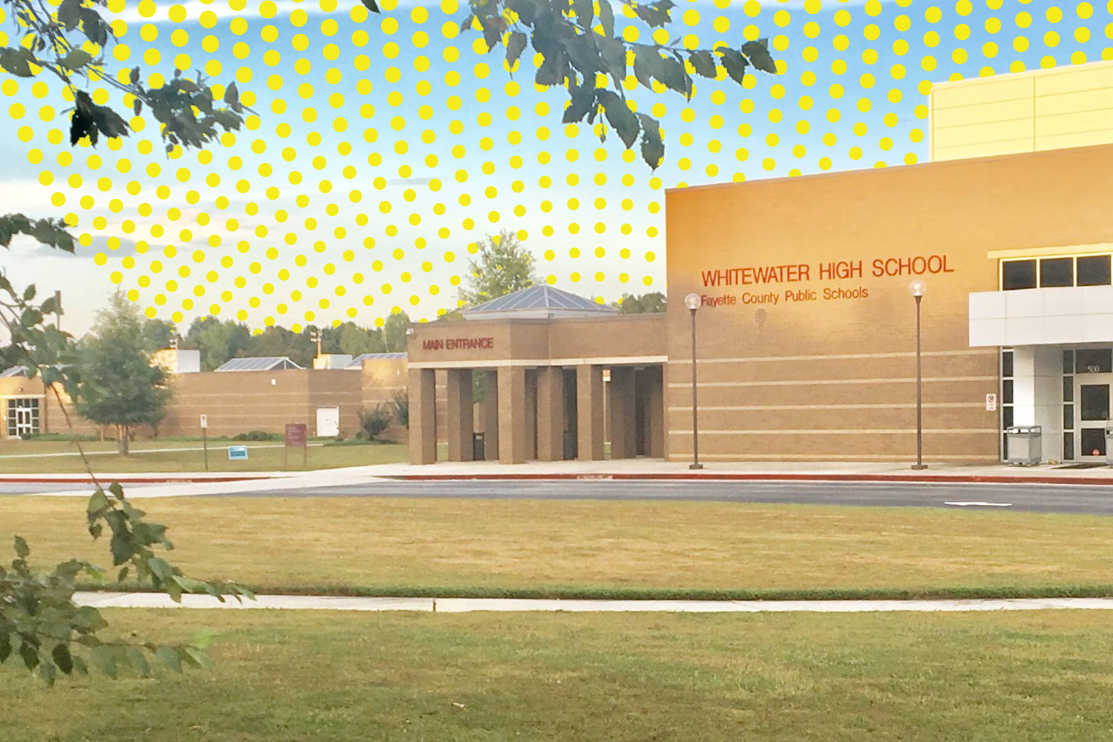
Fayette County, Georgia, sits just south of Atlanta, in a community where parents and students approach learning and life after graduation with genuine optimism. Fayette County Public Schools serves nearly 19,500 students across 24 schools, including five high schools. The district's mission is to prepare every student for the future they choose, whether that means returning home to build a career and raise a family in Fayette County or pursuing opportunities elsewhere. In short, success is measured by whether students leave high school ready to build the lives they want, wherever those paths may lead.
Kelly Floyd has spent nearly three decades helping students do exactly that. A school counselor at Whitewater High School and the district lead counselor for Fayette County's five high schools, she is in her 33rd year in education, her 28th as a counselor, and her fourth leading the district's counseling work. Those years have given her a front-row seat to the changing demands of college and career advising, along with a clear sense of what every student needs: the guidance, information, and support to find a path that is informed by their passions, builds on their strengths, and catalyzes their post-secondary success.
One year ago, Fayette County adopted SchooLinks, closing out nearly a decade with another college and career readiness (CCR) platform. Before that, counselors managed postsecondary planning through individual processes and spreadsheets, tracking documents in as many as ten separate ways across the district. Consolidating that work improved daily operations and made college and career advising far more organized and efficient.
Over time, however, the previous CCR platform no longer kept pace with the district's needs. As customer support declined and everyday tasks grew more inefficient, counselors found themselves working around the platform rather than relying on it. Floyd and her colleagues began evaluating alternatives, and after careful research, selected SchooLinks. They were drawn to the platform because it paired an intuitive experience for counselors and students with the implementation support the team had been missing.
Consistency Across All Five High Schools
Replacing the previous CCR platform solved more than a technology and workflow problem; it addressed a deeper challenge of ensuring consistency with excellence across the district. Under the prior system, adoption varied from school to school. Some counselors used it while others found it cumbersome and relied on their own processes, leaving students with different experiences depending on which high school they attended. For a district built on the promise that every student should have the same access to opportunity, that disparity was a significant limitation.
Learning a new platform naturally created some hesitation for counselors in a profession already stretched for time. As the first year unfolded, however, that hesitation quickly gave way to enthusiasm. Counselors found SchooLinks straightforward to use, its implementation support readily available, and answers easy to find when questions arose. The result was something the district had not achieved before: “Every high school participated and every student got the same service,” Floyd says. That consistency stood out as one of the district's greatest successes, and for Floyd it carried significant weight, because it meant no student's experience depended on the building they happened to attend.
One Place to Manage a Complex Application Process
The college application process quickly became one of the clearest examples of what SchooLinks made possible. Applications demand an extraordinary amount of coordination from counselors, who help students match their Common Application accounts, verify college lists, request recommendations, determine each institution's testing requirements, and make sure every transcript and supporting document reaches its destination. SchooLinks brings all of those moving pieces into one place. Counselors can see at a glance which materials have been submitted, which remain outstanding, and where a student needs help, work Floyd finds considerably easier to manage than it was under the district's previous platform.
Floyd has watched the number of college applications her students submit climb steadily in the years since the pandemic. SchooLinks has helped counselors manage that rising workload without losing sight of individual students. Because students route their documents through the platform, counselors have a complete, current picture of every student's progress. Missing steps are visible immediately, questions can be answered in real time, and students see the same view of what remains before an application is complete through their own SchooLinks profiles. For Floyd, that kind of visibility is the whole point. “If you don't have this platform, you don't really know what kids are doing,” she says. In practice, conversations now are able to shift away from tracking paperwork and toward helping students move forward on-time and with confidence.
Turning Scholarship Tracking into Targeted Outreach
Helping students earn the scholarships that fund their next step is a priority in Fayette County, and one the district has made measurable. Each high school reports the scholarship dollars earned by its graduating class, both on its own and as part of the district total, creating a friendly but real competition among the five high schools. The superintendent has explicitly encouraged counselors to help students capture every dollar available to them, and SchooLinks has made that work far easier and more effective. Students now record the scholarships they receive within the platform, and counselors gain a comprehensive picture of awards across the district. The previous platform could total scholarship dollars but not track individual awards, and before that, the work lived on paper and in spreadsheets.
Even more valuable, SchooLinks lets counselors identify the students who meet a scholarship's eligibility criteria and send the opportunity directly to them. That capability has grown increasingly important as scholarship requirements have become more complex. Floyd remembers when eligibility might rest on little more than a grade point average, which meant she could simply make copies of the information and hand them to every student who qualified. Today, eligibility often depends on layered academic, demographic, and extracurricular factors, making it difficult for a counselor to know, let alone reach, every student who qualifies. With SchooLinks, Floyd can match a scholarship's requirements against a student's profile and alert the student and their family to the opportunity rather than hoping they discover it on their own. As she puts it, the platform makes it simple “to send them information that they may not have received from somewhere else and may not have even thought about applying for.”
Forty Percent Less Time on Paperwork, More Time with Students
Floyd estimates that SchooLinks has reduced the time her team spends managing college applications and scholarships by a staggering 40 percent. Consolidating transcripts, letters of recommendation, and application materials into a single platform has eliminated much of the manual coordination that once consumed her counselors' days. Floyd shared that SchooLinks also connects with a far wider range of colleges than the previous system. Under the old system, counselors still had to send transcripts to many institutions through separate workarounds; with SchooLinks, Floyd needed to do that perhaps once all year.
Those efficiencies show up in the small moments that fill a counselor's day. When a student worries that a college never received a transcript, Floyd can open SchooLinks and confirm exactly when it was sent and downloaded, settling the question in seconds rather than launching an investigation. Time that once went to chasing paperwork now goes to advising students as they navigate life after high school. The time saved by using SchooLinks is time returned to the counselor availability for direct student services.
Building Early Momentum
Floyd explained that, from her perspective, successful implementation very much depended on students engaging with SchooLinks from the start. In order to accomplish this, Fayette County introduced the platform at the beginning of the school year, tailoring onboarding to each grade level. Seniors began with a kickoff to the college application process, where counselors laid out the year ahead, assigned a first activity, and walked students through the setup alongside everything SchooLinks offered beyond applications. Freshmen completed the process during class as well, while sophomores and juniors received instructions by email and finished independently at a remarkably high rate. Class time for the platform is limited, so the goal was to make sure students knew what was available to help them. Floyd reflected that students took to it quickly, enjoying the assessment that matches their results to celebrities and the early activities that got them thinking about careers and where their own interests might lead.
She shared that the rollout required remarkably little follow-up. By the time counselors met individually with students during registration, Floyd found only a handful across the school who still needed to complete onboarding, most of whom were new students or those participating in dual enrollment off campus. What stood out most was how quickly students began exploring SchooLinks on their own. Because the platform appears alongside the district's other applications through single sign-on, students discovered it before counselors ever introduced it. Throughout the summer, Floyd watched notifications arrive as students across the district completed career interest inventories and other activities without being prompted, a level of curiosity that has shaped the district's plans for year two.
Extending Readiness Beyond the Requirement
For Floyd, successful implementation marks the beginning of the work rather than the end. Her goal now is to move students well beyond the activities the district's scope and sequence requires. Going forward, monthly newsletters at every high school will feature a different SchooLinks tool, introducing students to a career assessment, a Learning Hub resource, a goal-setting activity, the resume builder, or another feature they might not otherwise find, and invite them to explore it on their own.
She is also looking for ways to embed those tools in learning already underway. Business, marketing, and career and technical education courses are natural partners, because students in them already build resumes and earn industry credentials. Floyd wants those teachers to anchor that work in SchooLinks' resume builder, and she is eager to expand use of the credential wallet as well. Students across the district earn industry certifications, from Adobe credentials to CNA, and the wallet lets them document those micro-credentials and other accomplishments as they earn them, building a stronger record of their skills well before graduation. Floyd is realistic about the constraints. Counselors will never have unlimited class time, so rather than asking for more, she is weaving college and career readiness into the experiences students already have, without adding another initiative to an already full school day.
SchooLinks and the Future Every Student Chooses
When Floyd speaks with other districts weighing SchooLinks, she leads with the incredible, unmatched customer support. Starting something new is the hardest part, she says, and doing it without support behind you can leave a district feeling it wasted its money. Fayette County never felt that way. “I don't have four hours a day to figure things out,” Floyd says, and SchooLinks had both the resources and the people in place to close that gap, so counselors could move quickly from learning the system to using it with ease. Rather than adding another responsibility to already demanding workloads, SchooLinks strengthened the work counselors do every day.
For Floyd, though, SchooLinks has always been a means to a larger goal. “If students become aware of what's out there and how to get there, they can better make decisions,” she says. High school, in her view, is a time for students to discover both what they want to do and what they do not. Career exploration, applications, scholarships, goal setting, and industry credentials all feed that discovery, helping students understand themselves and the possibilities ahead. A single class period cannot do that alone; the fuller picture comes from all the pieces together.
After 33 years in education, Floyd still measures success the same way she always has. She wants every student to leave high school with a direction they are excited to pursue. “I want you to find a path that you can do for 40 years and be happy with it every day going to work,” she says. “That's what I want for every student.” For Fayette County, SchooLinks has become part of how the district turns that hope into a plan and a path for every student.
Related Posts
See All
How Paradise Valley Unified School District Customized CCR in Arizona with SchooLinks
Supporting College & Career Readiness at Rolla Public Schools in Missouri

Helping Students Build Postsecondary Plans in Plano ISD, Texas

Get started with SchooLinks today.
