Simplifying Student Success at Hauppauge Public Schools with SchooLinks
Simplifying Student Success at Hauppauge Public Schools with SchooLinks
Simplifying Student Success at Hauppauge Public Schools with SchooLinks
Simplifying Student Success at Hauppauge Public Schools with SchooLinks
Simplifying Student Success at Hauppauge Public Schools with SchooLinks
Simplifying Student Success at Hauppauge Public Schools with SchooLinks
Simplifying Student Success at Hauppauge Public Schools with SchooLinks
Don't miss our breakout sessions!
Book time with our team on-site!
Our team is excited to meet you. Book a time that works best.

“It’s Life Changing”:
How Hauppauge Public Schools Built a Seamless Path to College and Career Readiness
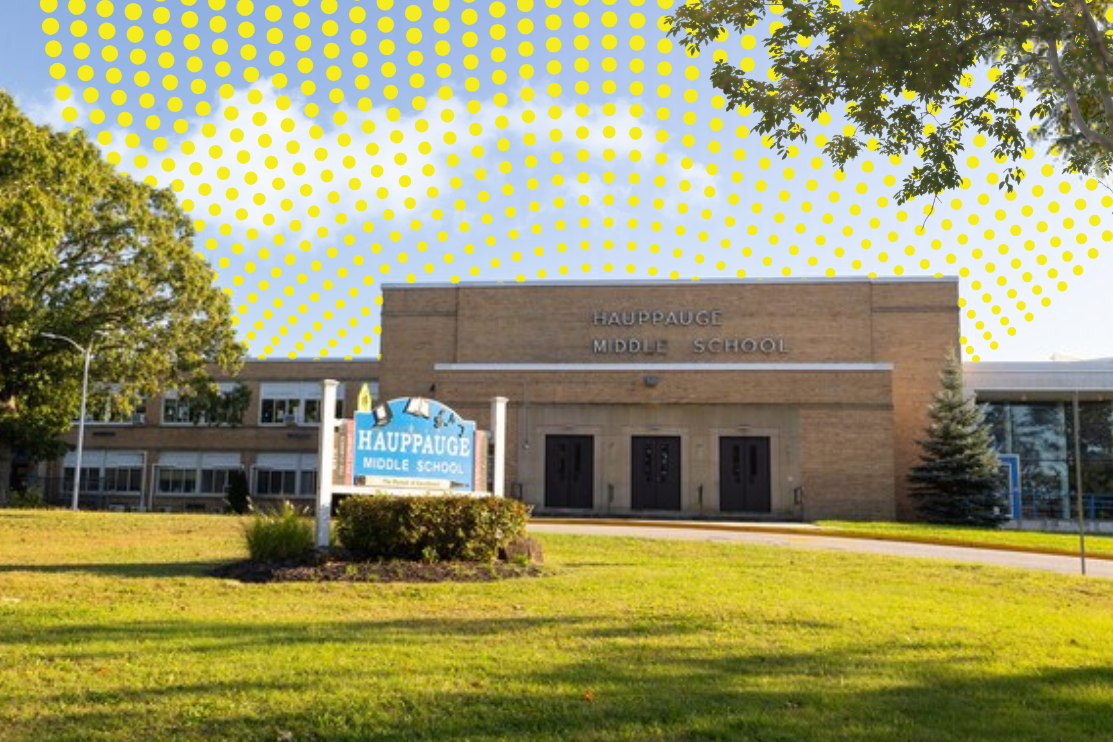
Located on Long Island, New York, Hauppauge Public Schools serves approximately 3,100 students across five buildings: three elementary schools, one middle school, and one high school. Over the past several years, the district has worked to establish a unified identity across those schools through its “Eagles Values” of engagement, leadership, accountability, and involvement. Within college and career readiness, those values translate into a commitment to ensuring that every student can access courses, experiences, and information that reflect their individual goals, whether their next step leads to a two- or four-year college, the military, a vocational program, or directly into the workforce.
Hauppauge strives to give students as much of a college campus experience as a high school can offer, with opportunities spanning athletics, theater, volunteering, and internships that allow students to explore their interests and prepare for what comes next. As those opportunities expanded, district leaders also wanted a stronger way to connect them. They needed to track student participation, integrate information with the student management system, recognize when students were approaching important pathway milestones, and give educators and families a shared understanding of each student’s progress.
Gary Campanelli, Director of Guidance, leads this work across the district. Now in his sixth year as director after previously serving as a high school counselor in another district, Campanelli oversees guidance and postsecondary planning across the full K–12 continuum. At the center of that work is a goal he has carried throughout his career: helping students understand the options available to them and forge a path that reflects their own aspirations. Last fall, Hauppauge launched SchooLinks for grades 7 through 12 to help scale that vision for all students.
“Putting My Own Apprehension Aside for the Betterment of Students”
Campanelli first learned about SchooLinks at a conference, and he understood immediately what changing a long-standing college and career readiness platform would require. Students, families, and educators become accustomed to the systems they use, and even a promising change can create uncertainty when it alters familiar routines. His initial instinct was caution. He told his superintendent that he worried about initiating a transition of this scale.
That hesitation gradually gave way to a different assessment. As Campanelli met with the SchooLinks team and spoke with leaders in districts already using the platform, he became increasingly convinced that the change could dramatically improve the experience for Hauppauge students. He ultimately set aside his own reservations, and Campanelli, the counseling team, and the Assistant Superintendent for Curriculum began planning the transition together. Their first priority was straightforward: students had to be able to access the platform easily.
“Click a Button and They’re In”
Under Hauppauge’s previous system, access had become a major obstacle. Students needed to remember separate usernames and passwords, and those who had not logged in recently often had to reset their credentials before they could begin. Each additional step created another point where engagement faltered.
Hauppauge integrated SchooLinks with ClassLink to provide single sign-on access, and the difference became apparent before the formal rollout even began. Students started entering the platform on their own, exploring features and completing activities they had not yet encountered in class. Counselors watched the activity appear in the live feed, surprised by the level of engagement from students who had received little prompting beyond access itself. For Campanelli, that early response showed what students would do once the challenges around access disappeared. Their curiosity and desire to explore their future options took over. Reflecting on the difference single sign-on has made for students and staff, he simply explained, “It’s life changing.”
“When the Stakes Become High, They Are Already Deeply Familiar with the Platform”
Ease of access addressed one challenge Campanelli had identified. Hauppauge also wanted to reconsider when and how students encountered college and career planning throughout their secondary experience. Under the previous platform, students typically received their logins in seventh grade and used the system for a lesson or two. They returned briefly in eighth grade for career day surveys, then might not encounter the platform again until junior year. By the time college and postsecondary planning became more consequential, students were being asked to navigate a system that no longer felt familiar.
Hauppauge designed its SchooLinks implementation to create greater continuity and engagement throughout middle and high school. The district established required touchpoints at least once each year in grades 7 through 11, giving students repeated opportunities to use the platform as their interests and plans develop. At the middle school, for example, students use SchooLinks to explore careers and complete interest surveys before the district’s annual career day. Their responses then help educators determine which professions students most want to learn about and inform the experiences the district provides.
That continuity became especially important as students approached the college application process. Hauppauge deliberately phased its transition over two years so that seniors would never have to learn an unfamiliar platform while managing application deadlines. During the first year, students in grades 7 through 11 moved into SchooLinks while seniors completed their applications in the previous system. Juniors encountered SchooLinks during their individual meetings and learned how they would eventually use it for college applications. When they returned as seniors, they could move directly into teacher recommendation requests, the College Application Manager, and other next steps because the platform was already familiar. The result is a fundamentally different relationship between students and the district’s college and career readiness system. Students now encounter SchooLinks early enough and often enough to understand how it can support their future, and the platform has become part of the infrastructure surrounding their planning.
“If We Have a Problem, We’re Going to Be Able to Fix It”
For Campanelli, the strongest distinction between SchooLinks and Hauppauge’s previous platform has been the support behind it. His experience with the previous platform had shown him how much that support can shape a team’s daily work. When the district needed help resolving an issue on that platform, eight weeks passed before it received a response, leaving Campanelli and his team waiting for the support they needed to move forward.
With SchooLinks, the experience has been markedly different. When Hauppauge encountered an issue affecting a parent’s access, the district received an answer within 24 hours and worked with its IT team to resolve the problem. For the smaller questions that arise in the course of daily work, Campanelli and his team can turn to the SchooLinks support page and AI chat for answers at the moment they need them. He shared a recent example in which he used the support system to confirm that he had uploaded transcripts correctly. When a question requires additional assistance, he said the SchooLinks team typically responds within the day and sometimes within minutes.
For Campanelli, that responsiveness has changed what it means to rely on a platform across an entire district. Good communication can be easy to overlook until a team experiences the difference it makes in the daily work of supporting students, particularly when staff know that encountering an unfamiliar problem will not leave them searching for an answer on their own. “Having that level of support and knowing SchooLinks is there to support me makes my role as director overseeing 12 grade levels so much easier,” he said, “knowing that if we have a problem, we’re going to be able to fix it, and we’re going to be able to support our students.”
For Staff Training, “We Were Able to Pinpoint What Was Important for Hauppauge”
Hauppauge brought the same intentional approach it used for the student implementation to staff training on SchooLinks. District leaders reviewed the full library of SchooLinks trainings, identified the sessions most relevant to their work, and customized professional learning around the responsibilities of different members of the team. Clerical staff learned the Transcript Manager used for college applications, counselors focused on college search features, and middle school counselors developed the knowledge they needed to guide younger students through career exploration.
Campanelli also wanted expertise distributed across the entire department so that no single person held all of the answers. Bringing seven or eight colleagues into training created a broader base of knowledge while producing questions and ideas that one person working alone might never consider. Staff members could identify features they wanted to explore, discover capabilities already available within SchooLinks, and raise ideas about ways the platform could better support Hauppauge’s work.
That exchange has helped the district develop a relationship with SchooLinks that extends beyond implementation. Hauppauge can learn from the SchooLinks team while also providing feedback grounded in how educators and students use the platform in practice. When staff members ask about a feature, the SchooLinks team either shows them where it already exists or works with the district to adapt the platform to its needs. And the platform itself has made that distributed learning easier. “If you are even remotely tech savvy, the program is really self-explanatory,” Campanelli said. Demo features allow counselors to experience SchooLinks from a student’s perspective before walking into a classroom, giving them a clear understanding of what students will see and how they can guide them through it.
“If We Have the Ability to Drive Students to One Location, It’s a Lot Easier”
Hauppauge initially planned to keep its existing course planning system to avoid introducing too much change at once. Campanelli knew the district could add Course Planner later once students and staff had acclimated to the platform. As New York State began adapting graduation measures and pathways, however, and Hauppauge continued developing pathways of its own, district leaders saw greater value in connecting course planning with the rest of each student’s college and career readiness experience.
SchooLinks Course Planner gives the district a way to map pathways, track completed coursework, and follow student progress over time while bringing the district’s course guide into the same system students already use for broader postsecondary planning. Students and families now have a one-stop shop. That connection can also help counselors recognize when students are approaching pathway milestones they may not realize they are close to completing, creating opportunities for timely conversations about courses, credentials, and accomplishments that could strengthen a future application or resume.
The move reflects a broader priority for Hauppauge. The district is looking for opportunities to bring more of its work into one place, so that students, families, and counselors spend less time navigating an expanding collection of systems. Hauppauge has already discontinued one separate subscription because SchooLinks provides the same functionality, and district leaders continue to examine other redundancies as they determine how the platform can support more of their work. For Campanelli, the principle is simple: “If we have the ability to drive students to one location, it’s a lot easier.”
“Not a Single Complaint” and an Unexpected Wave of Compliments
Hauppauge entered its first year with a clear measure of success: the district wanted the transition to feel seamless for students and families. Their response ultimately became one of the most meaningful indicators that the rollout had worked. Large numbers of students and parents engaged with SchooLinks, and many went beyond simply using it. They emailed Campanelli or approached staff members in person to comment on how easy the platform was to access and navigate, its visual design, and the quality of the information available. After years working with college and career readiness systems, Campanelli had never received that volume of unsolicited positive feedback about a platform. The response carried particular weight given his apprehension at the beginning of the process. Hauppauge rolled out SchooLinks to more than a thousand students and more than a thousand parents without a single complaint. In school districts, where feedback so often arrives only when students or families encounter challenges, that kind of response is rare.
For Hauppauge, that successful transition has created the foundation for something very meaningful. SchooLinks now gives the district a common place to connect career exploration, college planning, course decisions, pathway progress, and the experiences students accumulate along the way. As Hauppauge continues expanding how it uses the platform, the goal remains rooted in the same Eagles Values that guide the district across every grade level. The district is using SchooLinks to help students engage with their futures, understand the opportunities available to them, and build a path toward whatever comes next.
Related Posts
See All
How Paradise Valley Unified School District Customized CCR in Arizona with SchooLinks

Supporting College & Career Readiness at Rolla Public Schools in Missouri

Helping Students Build Postsecondary Plans in Plano ISD, Texas

Get started with SchooLinks today.
